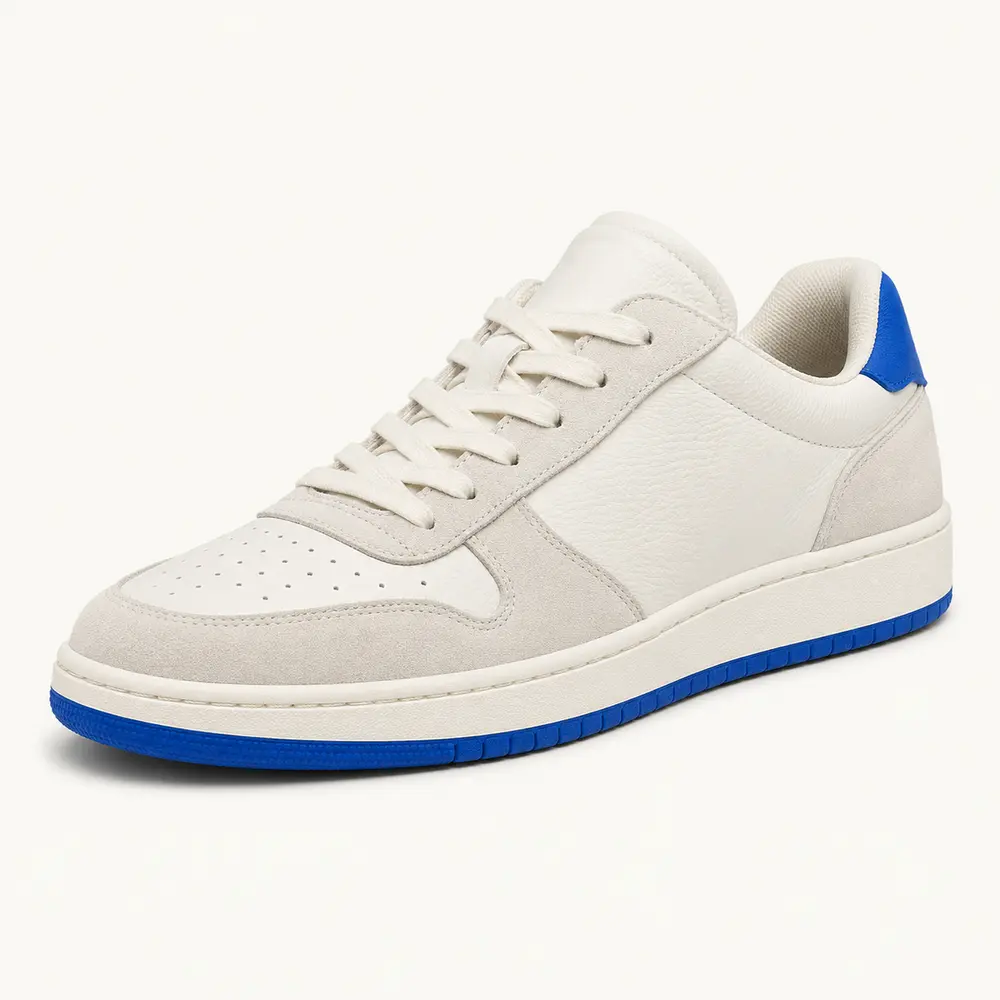
The first time warehouse photos appear, it is tempting to treat them as a green light. The parcel has reached the warehouse, the item is lying on a clean surface, and nothing looks obviously broken. That is reassuring, but it is not a complete review. A useful QC check is a comparison between the option you paid for and the evidence that arrived—not a quick reaction to a nice-looking photograph.
01 · Start with the actual service
What OOPBUY says happens at the warehouse
OOPBUY's current Beginner's Guide describes a clear sequence: the seller sends the item domestically, the warehouse signs for the delivery, staff conduct a quality inspection, and the goods are stored. Its public platform-protection page also advertises 100% quality inspection and 90 days of free storage. Current product pages show estimated weight, estimated dimensions and QC-photo areas when that information is available.
Those statements establish the platform workflow. They do not mean that every possible defect can be discovered from standard photos. “Quality inspection” in this setting is best treated as a visible receiving check: the warehouse can photograph what arrived, identify obvious differences and make the item available for your review. It is not the same as wearing the garment, testing an electronic device for months or authenticating a branded product.
| Evidence you may receive | Decision it can support | Limit to remember |
|---|---|---|
| Overview photos | Model, color, quantity and obvious condition | Small details may not be readable |
| Label or tag photo | Printed size, model code or care information | A label does not prove real measurements |
| Measurement photo | Approximate length, width or sole dimensions | Angle and tape placement affect the reading |
| Close-up photo | Stitching, print, hardware or a suspected mark | Only the photographed area is documented |
02 · Rebuild the order first
Do not inspect from memory
Before opening the warehouse gallery, pull up the details that controlled the purchase: seller, product title, selected option, color, size, quantity and any order note. If possible, keep the seller's option image or a screenshot taken at checkout. A marketplace listing may change after purchase, so the current page is not always a perfect record of what was offered that day.
This matters most on listings with vague translated options. “Black,” for example, may appear under several models or bundles. A size such as “L” may refer to an Asian chart rather than the measurements a buyer expects at home. If you review the photos without the original selection beside them, it is easy to approve a similar item that is not actually the selected variant.
Also check the item count. Sets, replacement laces, straps, removable badges and small accessories are easy to overlook. A wide overview photo may show that the main item arrived while leaving an included piece outside the frame. Count what should be present before judging the finish.
03 · A repeatable method
The five-pass QC review
A consistent order prevents visual details from distracting you from a more important mismatch. Start broad, then move closer. There is little value in studying one line of stitching if the warehouse received the wrong color or size.
Identity
Model, color, variant and obvious design match the order.
Quantity
Main pieces and included accessories are all accounted for.
Size
Labels and measurements support the option you selected.
Pass one: identity. Compare the silhouette, color blocking, model details and variant. On shoes, look at both sides and both shoes, not one attractive angle. On bags, compare shape, strap type and closure. On jerseys or printed clothing, confirm the ordered player, number, patch set or print option rather than assuming the front view tells the whole story.
Pass two: quantity. Count the item itself and all components promised by the selected option. Bundles deserve extra care. If the listing showed a two-piece set, one garment in the warehouse is not a complete delivery simply because its color is correct.
Pass three: size evidence. Read the size tag, but do not stop there. A tag confirms what the manufacturer printed. It does not prove chest width, garment length, waist, inseam or insole length. When fit matters, a correctly positioned tape measure is more useful. Allow for small reading differences caused by fabric tension, camera angle and where the measurement begins.
Pass four: visible condition. Zoom in on stains, glue marks, dents, scratches, pulled threads, open seams, crooked prints, uneven panels and damaged hardware. Compare left and right sides where symmetry matters. Some details are normal production variation; the point is not to invent perfection, but to decide what is acceptable to you before international shipping.
Pass five: packaging impact. Decide whether the retail box or rigid packaging is part of what you want to preserve. Keeping it may protect the item and may also increase parcel dimensions. Removing it can reduce volume while giving up some protection and collector value. Make that tradeoff deliberately, not after seeing the freight quote.
04 · Know where the evidence ends
A clear photograph still has blind spots
Standard warehouse photos can support a visible-condition decision. They cannot prove fabric composition, odor, long-term colorfastness, waterproofing, battery health, internal electronics, sole durability or comfort on your body. A neat seam in one photo does not prove every internal seam is strong. A device that looks correct is not automatically safe or compatible with your country's voltage and rules.
Color is also imperfect evidence. Warehouse lighting, camera settings and your display can shift tone. If the difference is large—navy instead of pale blue, for example—that is worth questioning. If the concern is a subtle shade, ask for a clearer comparison and accept that a screen cannot provide laboratory color matching.
Branded or restricted goods create another boundary. A QC gallery may show logos and construction, but this site does not treat that as proof of authenticity or legal importability. Route eligibility and customs treatment depend on the actual destination, content and current carrier rules. Product appearance and shipping permission are separate checks.
05 · Act while options remain
Approve, question or request after-sales action
Approve when the identity, quantity, size evidence and visible condition are acceptable and the unanswered limits do not matter for your use. Ask a focused question when one missing angle, measurement or close-up would change the decision. “More photos” is less useful than “please show the left heel from the rear” or “please measure pit to pit with the garment flat.”
If the item is wrong or visibly unacceptable, use the current order's after-sales controls promptly. OOPBUY publishes a Returns and Refunds notice, but seller support, product exceptions, warehouse status and the current time window can affect what is available. The safest approach is to inspect each arrival when it is stocked, not weeks later when the whole haul is ready.
Do not submit a questionable item into an international parcel just to keep the rest of the haul moving. Once items are combined, packed and handed to a carrier, a seller-level correction becomes far harder. Warehouse storage exists partly to give you a decision window; use it without treating the advertised 90 free days as a 90-day return promise. Storage time and after-sales time are not the same thing.
06 · Save this order
The final warehouse-photo checklist
- Open the saved product option and order details.
- Match model, color, variant and quantity before details.
- Count every promised piece and accessory.
- Read labels and request measurements when fit matters.
- Inspect both sides, both shoes and repeated components.
- Zoom in on prints, seams, edges, hardware and marks.
- Separate visible evidence from durability assumptions.
- Decide whether original packaging is worth the volume.
- Ask a precise question when one image would decide the case.
- Use current after-sales controls without delay.
Good QC is not about finding a reason to reject every item. It is about making an informed decision while the warehouse still gives you leverage. Keep the order record beside the photographs, review in the same sequence every time, and be honest about what the camera cannot tell you.
Verifiable evidence record
Match each claim to a named, dated source.
These are locally displayed research notes, not promotional links. The source name, page title, check date and exact claim are preserved so readers can distinguish published platform information from third-party opinion.
OOPBUY
Beginner's Guide
Describes seller delivery, warehouse receipt, quality inspection, storage and later parcel submission.
Evidence type: Official primary sourceOOPBUY
Shipping Estimation
Uses destination country, parcel weight and length, width and height as quote inputs.
Evidence type: Official primary sourceOOPBUY
Platform Protection
Publishes 100% quality inspection, 90 days of free storage and 24/7 support as platform protections.
Evidence type: Official primary sourceThis record proves what the named pages displayed on the check date. It does not verify every user review, freeze a policy, guarantee a route price or predict an individual order.