OOPBUY domestic shipping is the delivery leg inside China: the marketplace seller sends the selected item to the OOPBUY warehouse before any international parcel is created. It can be free, separately charged or embedded in the selected listing, and it belongs to the product-stage budget—not the later international freight quote. Treating this leg as its own evidence trail makes it easier to compare sellers, understand a delay and prove whether the warehouse received the parcel connected to your order.
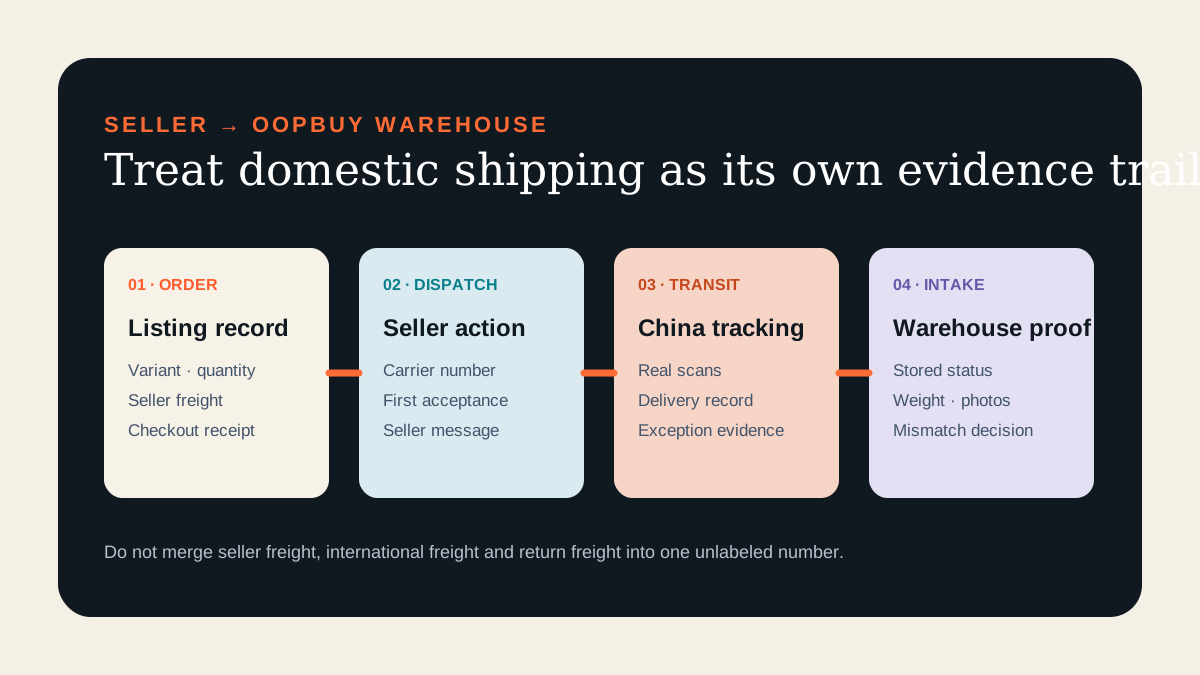
01 · Separate the two shipping legs
The direct answer: domestic shipping ends at the OOPBUY warehouse
OOPBUY’s current Service & Fees notice defines product cost as the item price plus freight from the seller to the OOPBUY warehouse. Current public product pages show the same two-stage model: first “From Seller to Oopbuy warehouse,” then “From Oopbuy warehouse to your delivery address.” The first charge moves one marketplace order inside China. The second is international shipping for a later parcel and depends on a different set of facts.
This separation matters even when the domestic field displays free. A zero shown for one listing is evidence about that selected offer at that moment, not a permanent platform promise. Another seller, variant, quantity or promotion may show a charge. Likewise, an international estimate does not include every China-side order automatically unless the checkout explicitly says so. Save both figures under different labels.
02 · Verify before paying
Build a domestic-shipping row for every seller order
Start from the exact selected variant. Marketplace pages often contain several colors, sizes, bundles or quantity tiers. The lowest visible price and the first photograph may not describe the option you intend to buy. Confirm the seller, variant, quantity, product price and domestic freight together, then save the checkout result. If the order form changes a value after the link is imported, stop and compare the source page again.
| Evidence | What to record | Why it matters |
|---|---|---|
| Source listing | Seller, URL and selected option | Connects the cost to the intended item |
| Order form | Item price, quantity and China freight | Shows the amount submitted to the agent |
| Payment record | Currency, total and timestamp | Separates charged from estimated |
| Seller dispatch | Carrier number and first acceptance scan | Shows whether physical movement began |
| Warehouse record | Stored status, weight and inspection entry | Confirms intake rather than mere delivery |
For a multi-item order, do not automatically divide one seller’s domestic charge equally. A seller may combine items, apply a threshold, or create more than one package. Keep the seller’s actual order-level charge until the platform or seller provides a reliable allocation. Inventing a per-item amount makes later comparisons look more precise while weakening the evidence.
03 · Compare orders, not thumbnails
Use a normalized seller-to-warehouse comparison
Suppose two listings appear to offer the same garment. Listing A has the lower item price but adds domestic freight; Listing B costs more and displays free China delivery. Compare selected item price + confirmed domestic freight for the same quantity and variant. Then keep seller identity, return eligibility and dispatch evidence beside the number. A small apparent saving is not useful if it belongs to another size, a deposit option or an unavailable seller.
When several products come from the same seller, ask whether the live order actually combines them before treating the freight as shared. When products come from different sellers, expect separate China-side movements and separate warehouse arrival times. Consolidation occurs after acceptable items are stored; it does not erase the seller-to-warehouse journeys that brought them there. The parcel consolidation guide begins only after those independent order records are ready.
04 · Status is a clue, not proof
Read Place Order, Shipped and Stocked as different events
Current OOPBUY product pages present a sequence that includes placing the order, seller shipment and warehouse stock-in. “Place Order” describes the purchasing stage. “Shipped” indicates that seller dispatch has been recorded, but the strongest evidence is a carrier number with an acceptance scan. A number with no physical scan may be a label or an uncollected booking. “Stocked” is the warehouse-side milestone that makes the received unit available for inspection and later parcel planning.
Carrier delivery and warehouse intake are not necessarily the same timestamp. A China tracking page can show delivery while the receiving team still matches the package to an order, weighs it and creates the warehouse record. Escalate from the last authoritative event. If there is no acceptance scan, the seller side needs attention. If tracking shows movement, follow the carrier evidence. If delivery is recorded but stock-in is absent, provide the carrier number and delivery record when asking the warehouse to investigate.
05 · Diagnose before chasing a promise
Handle seller-to-warehouse delays without inventing a universal deadline
OOPBUY’s current product-page notice says seller-related reasons such as pre-orders or stock shortages can delay dispatch and warehouse receipt. It does not turn every estimated date into a guarantee. A useful delay check therefore asks what evidence is missing rather than how many days an article claims the process “normally” takes.
First, verify that the order was actually purchased and that the selected option remained available. Second, look for a carrier number and its first physical scan. Third, distinguish no movement from a carrier exception or a completed delivery. Fourth, compare the delivered recipient information with the warehouse instructions in the order record. Finally, send one concise support request containing the order number, seller, carrier, tracking number, last scan and the result you need confirmed.
Do not open repeated requests that omit the evidence. A clear message—“carrier shows delivered, but the order has no warehouse intake record”—is actionable. A vague message—“where is my haul?”—forces support to reconstruct the same trail. Keep screenshots dated because marketplace and carrier pages can update after the dispute begins.
06 · Cost can reappear after QC
Domestic freight also matters when an item goes back
The original seller-to-warehouse charge and a later warehouse-to-seller return charge are different events. OOPBUY’s public returns notice says return or exchange handling depends on seller agreement and that seller-side shipping can be borne according to the reason and applicable conditions. Do not assume “refund” means every transport amount is reversed. Check which rows are refundable: product price, original China freight, return freight and any platform handling are separate questions.
Act from the warehouse evidence. Compare the stored item with the selected listing, photograph the mismatch and use the live after-sales option while it is available. The status-based return guide explains why a cancellation before seller purchase is different from a warehouse return after delivery. In your cost ledger, keep charged, refunded and deducted amounts in separate columns so a wallet credit cannot be mistaken for a full original-method refund.
07 · Reconcile one order
A practical domestic-shipping ledger example
Imagine three items: two from Seller A and one from Seller B. Seller A’s checkout shows one combined China delivery charge, while Seller B shows free domestic delivery. Record two order rows, not three guessed freight shares. Seller A later creates two tracking numbers; add both under the same order. One parcel arrives and is stocked, while the second has no acceptance scan. Seller B is delivered and stocked normally.
The next action is not to consolidate all three items or average the delay. Approve the stored items only after QC, then investigate Seller A’s missing physical scan. If that item is cancelled or refunded, update its product and freight rows from the actual receipt. When every accepted item is stored, create a new international-parcel worksheet. This preserves the boundary between purchasing evidence and parcel economics.
A minimal formula is: China-side order cost = selected merchandise + confirmed seller-to-warehouse freight − order-stage refunds. Keep return freight and international shipping outside this formula. The goal is not accounting complexity; it is preventing one later charge from hiding another earlier one.
08 · Before warehouse approval
OOPBUY domestic shipping checklist
- Confirm the seller, exact option, quantity and live item price.
- Record the displayed seller-to-warehouse freight separately.
- Save the order form and payment receipt with timestamps.
- Do not treat a dispatch label as physical carrier acceptance.
- Keep every tracking number attached to the correct seller order.
- Distinguish carrier delivery from warehouse stock-in.
- For a delay, report the last authoritative scan and missing event.
- Compare stored goods with the saved variant before approval.
- Separate original domestic freight from return freight.
- Verify actual refunded and deducted rows instead of assuming.
- Start international parcel planning only after acceptable items are stored.
- Keep unknown costs blank rather than entering a confident zero.
A disciplined domestic-shipping record will not make a seller dispatch faster. It will, however, tell you who controls the next event, which cost belongs to which stage and what evidence supports an escalation. That is the difference between waiting blindly and managing the China-side leg of an advanced cost plan.
Sources · checked August 12, 2026
Evidence and limits
OOPBUY — Service & Fees public notice
Supports treating product price and seller-to-warehouse freight as the product-stage cost, separate from international shipping.
OOPBUY — current public product pages
Supports the two shipping legs, current order-status sequence, domestic-freight field and seller-delay caveat. Individual listing values can change.
OOPBUY — Returns and Refunds public notice
Supports the distinction between seller agreement, return reasons, handling and seller-side transport responsibility.
OOPBUY — Inspection Information
Supports using stock-in and inspection evidence to decide whether the received unit matches the ordered specifications.
Close the domestic-shipping record before building the parcel.
Use the true-cost ledger for the full budget, then apply the warehouse QC checklist to each stored item.